How long
Three to five days for the island and one in Formentera. Ibiza rewards those in no hurry.
Best time
May, June, September and early October: warm sea and fewer people. July and August are expensive and crowded; in winter many places close.
Getting there (from Lisbon)
There are direct flights from Lisbon in high season, about two hours, and connections via Madrid or Barcelona the rest of the year.
Ideal for
Couples, friends, lovers of beaches, sunsets and good food, with or without the urge to dance until morning.
Don't forget
Book accommodation and transport early. In summer Ibiza sells out and prices soar.
Ibiza has two reputations, and both are true. There's the Ibiza of legendary clubs, DJs and nights that end at noon. And there's another, older and calmer one: a World Heritage walled town, coves of clear water among pines, white villages inland, hippy markets from the sixties and sunsets that gather hundreds of people in silence. The good news is that you can choose. The better news is that you can have both.
Dalt Vila: the walled upper town
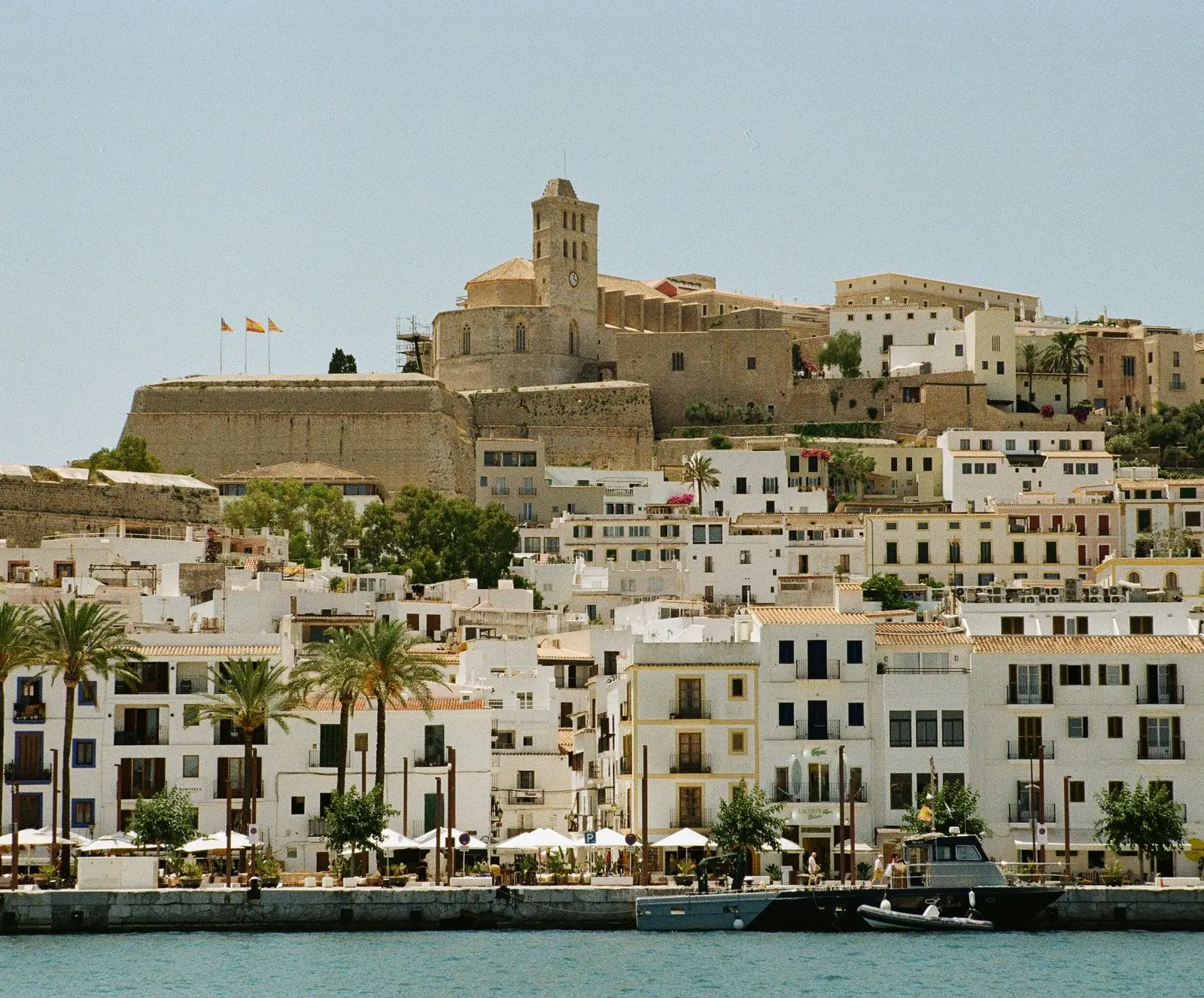
Dalt Vila, Ibiza's upper town, is surrounded by sixteenth-century Renaissance walls built to defend the island from pirates. It is part of the ensemble listed as a UNESCO World Heritage Site, which also includes the seagrass meadows offshore and Phoenician sites.
You enter through the Portal de ses Taules, with an old drawbridge, and climb stone streets with white houses, bougainvillea and small squares. At the top are the cathedral and the old castle, with views over the port, the sea and, in the distance, Formentera.
In the late afternoon Dalt Vila turns golden and peaceful, and the restaurants in its squares fill for dinner. Below, the La Marina quarter by the port has shops, bars and a lively waterfront.
The coves: turquoise inlets among the pines
Ibiza's real treasure is its calas, small coves of sand or pebbles with water so clear you can see the bottom several metres down. The meadows of posidonia, a protected seagrass, help keep it this transparent.
Cala Comte, in the west, has water in many shades of blue and is famous for sunsets. Cala d'Hort looks out on Es Vedrà, a huge, mysterious rock in the sea full of legends. Cala Salada, Cala Tarida with its boathouses and Cala Benirràs in the north complete a list that could go on for a long time.
Many coves have a simple beach restaurant, a chiringuito, serving fish and rice with your feet almost in the water. In summer, arrive early: parking is limited and the small coves fill fast.
The sunset: a collective ritual
In Ibiza, watching the sunset is a social event. In Sant Antoni, the strip of sunset bars fills every day with people who come to see the sun drop into the sea to music, and there's applause when it disappears.
For a calmer sunset, Cala Comte and Cala d'Hort, with Es Vedrà in front, are unforgettable. At Benirràs on Sundays, drummers gather to bid the sun farewell, a tradition inherited from the hippy days.
Bring a drink, arrive in good time and get your camera ready. But keep a few minutes just to look.
Hippy markets and inland villages
In the sixties Ibiza drew hippies from all over the world, and the spirit lives on in its markets. Las Dalias in Sant Carles and Punta Arabí in Es Canar sell clothes, jewellery, crafts and all sorts of objects, with music and food.
The interior is surprisingly rural, with almond and carob fields, stone walls and white villages with fortified churches. Santa Gertrudis, Sant Joan and Sant Miquel are among the prettiest, with quiet terraces and design shops.
For food, try bullit de peix, a fish stew with rice, sofrit pagès, a dish of meats and potatoes, and flaó, a mint-scented cheesecake. To finish, a glass of hierbas ibicencas, the island's herbal liqueur.
Formentera: the island next door
About half an hour away by fast boat is Formentera, a small, flat, peaceful island famous for beaches with Caribbean-coloured water, such as Ses Illetes, on a tongue of sand between two seas.
In Formentera you rent a bike, a scooter or a small car and go from beach to beach. The pace is much slower than in Ibiza, and that is exactly what makes it special.
Boats leave Ibiza port several times a day. A day in Formentera is one of the best ways to round off the trip, especially if you want to rest from Ibiza's nights.
A perfect day in Ibiza
09:30
Dalt Vila
Up through the walls, the cathedral and the view over the port before the heat.
11:30
Cala Comte
A swim in clear water and lunch at a chiringuito.
14:00
Late lunch
Bullit de peix or fish rice with a sea view.
16:00
Santa Gertrudis
Coffee on a village terrace and a drive through the interior.
18:30
Cala d'Hort and Es Vedrà
The mysterious rock and the island's most beautiful sunset.
20:30
Dinner in Dalt Vila
A restaurant on a square in the upper town.
22:30
Night
A bar in the port or a legendary club, depending on your energy.
What it costs
Ibiza is one of the most expensive destinations in the Mediterranean in summer. Outside July and August, and away from the clubs, the island becomes much more affordable.
Budget
100–170 €
per person, per day
Hostel, buses, accessible coves, markets and free sunsets. Low season helps a lot.
Comfortable
230–420 €
per person, per day
Hotel in town, a rental car, a day in Formentera and dinners with wine.
No expense spared
600–1500 €
per person, per day
Villa or luxury hotel, private boat, exclusive beach restaurants and private transfers.
Hostel bed
per night · Much more expensive in August
40 € – 80 €
Mid-range hotel
per night, double room
140 € – 280 €
Boutique or luxury hotel
per night, double room
300 € – 700 €
Boat to Formentera
per person, return
30 € – 60 €
Small car rental
per day · Can cost more in summer
25 € – 45 €
Club entry
per person · Big events cost much more
40 € – 80 €
Menu of the day at lunch
per meal
15 € – 25 €
Dinner with wine
per person
35 € – 70 €
Boat trip to the coves
per person
60 € – 150 €
Approximate reference values for 2026. Always check before you go.
Tourist mistakes to avoid
- ✕Coming in August without bookings and expecting cheap accommodation.
- ✕Thinking Ibiza is only clubs and never seeing Dalt Vila or the coves.
- ✕Anchoring boats on the posidonia meadows. They're protected and keep the water clear.
- ✕Heading to Cala Comte in the late afternoon in August without allowing for sunset traffic.
- ✕Visiting in winter expecting summer nightlife. Many places close.
- ✕Leaving the island without a day in Formentera.
«In Ibiza the day ends with applause for the sun. The night, nobody knows when it ends.»
More photos of Ibiza
Frequently asked questions
How do I get from Lisbon to Ibiza?
By plane. In high season there are direct flights of about two hours; the rest of the year, connections via Madrid or Barcelona.
What is the best time to visit Ibiza?
May, June, September and early October, with warm sea and fewer people. July and August are very crowded and expensive; in winter many businesses close.
What is Dalt Vila?
Ibiza's upper town, surrounded by Renaissance walls and listed as a UNESCO World Heritage Site, with the cathedral, stone streets and views over the port.
What are the best coves in Ibiza?
Cala Comte, Cala d'Hort facing Es Vedrà, Cala Salada, Cala Tarida and Cala Benirràs are among the most beautiful. Arrive early in summer.
How do I get from Ibiza to Formentera?
By boat from Ibiza port, with several departures a day. The fast boat takes about half an hour.
Prices, opening hours and rules are approximate reference values and may change: always check before you go. Photos: Pexels.