How long
One day is enough for La Cité and the Bastide. With two, add the Cathar castles and the vineyards.
Best time
Spring and autumn. Summer is crowded; on 14 July the citadel is «set ablaze» with fireworks.
Getting there (from Toulouse)
From Toulouse, about an hour by train or car. From Lisbon, the easiest option is to fly to Toulouse. Carcassonne also has a small airport with few connections.
Ideal for
Families, lovers of castles, medieval history, photography and comfort food.
Don't forget
Arrive early or stay until the end of the day. On summer afternoons La Cité's streets fill up.
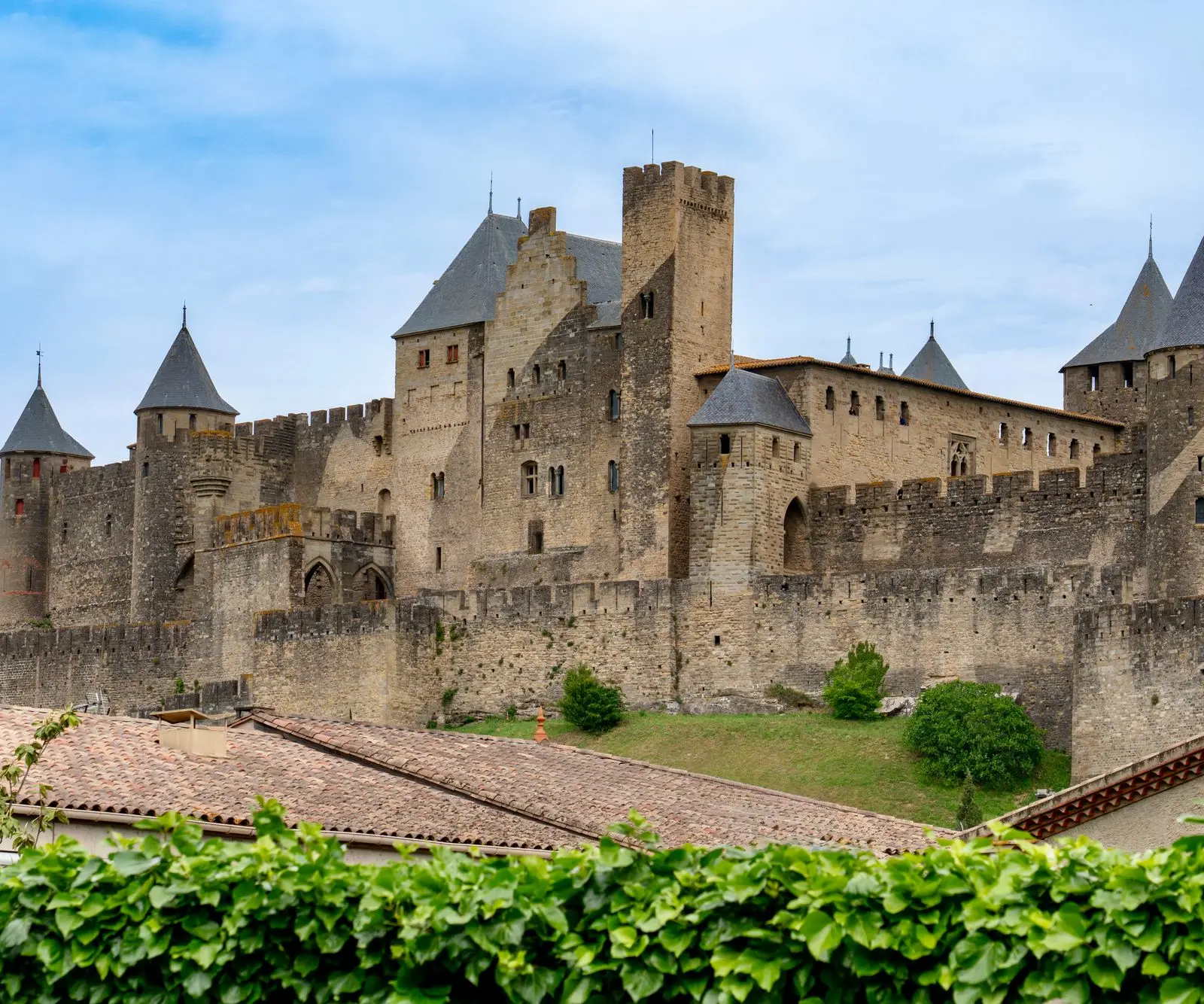
Carcassonne is the castle children draw when asked to draw a castle. Double walls, fifty-two towers with pointed roofs, drawbridges, battlements and a castle within the citadel, all on a hilltop above the vineyards of the Languedoc. It's the largest medieval fortified city in Europe, a UNESCO World Heritage Site, and it looks straight out of a film. Partly, it is: it was restored in the nineteenth century with some imagination. But the effect is so good that nobody complains.
La Cité: the citadel of 52 towers
La Cité, the medieval citadel, is surrounded by two rings of walls about three kilometres long with fifty-two towers. The earliest fortifications are Roman; most of what you see is medieval; and the pointed slate roofs are the work of architect Viollet-le-Duc, who restored the citadel in the nineteenth century and still divides experts.
You enter through the Porte Narbonnaise, with its drawbridge, and discover a small town of stone streets, squares, shops and restaurants. Between the two walls runs a path, the lices, which lets you walk around the citadel with views over the countryside.
At night, illuminated La Cité is one of the most beautiful sights in southern France. And after ten at night, when day visitors leave, the streets become almost empty and silent.
The Château Comtal and the Basilica of Saint-Nazaire
Inside the citadel stands the Château Comtal, a fortress within the fortress, with a moat, bridge and towers. The visit includes the castle rooms, a sculpture museum and, above all, a walk along the ramparts with spectacular views over the citadel and the plain.
The Basilica of Saint-Nazaire combines a Romanesque interior with a Gothic choir lit by magnificent thirteenth- and fourteenth-century stained glass. On a sunny day the coloured light fills the church, one of the most beautiful things in Carcassonne.
There are also small museums, medieval knight shows in summer and, on 14 July, the «embrasement» of the Cité, a firework display that makes the citadel look as if it's on fire.
The Bastide Saint-Louis: the lower town
Across the river Aude lies the Bastide Saint-Louis, the lower town, founded in the thirteenth century on a grid plan. It's where the locals live, with markets, shops, cafés and the lively Place Carnot.
The medieval Pont Vieux links the two towns and offers one of the best views of La Cité on its hill. Walking from one to the other is short and very pretty, especially in the late afternoon.
The Bastide is also where the Canal du Midi passes, a seventeenth-century engineering feat linking Toulouse to the Mediterranean, listed by UNESCO. There are short boat trips and paths along the banks in the shade of plane trees.
The Cathar castles and the Languedoc vineyards
Around Carcassonne lie the so-called Cathar castles, cliff-top fortresses linked to the history of the Cathars, a religious movement persecuted in the Middle Ages. Peyrepertuse and Quéribus, perched on rocky ridges, and the four castles of Lastours are among the most impressive.
The climbs are steep, but the views and the feeling of being at the end of the world make up for it. Bring water, a hat and proper footwear, and avoid midday in summer.
The region is also wine country: Corbières, Minervois and Limoux, whose sparkling Blanquette claims to be older than champagne. A private tour lets you combine a Cathar castle and a wine tasting on the same day.
Cassoulet and the Languedoc table
The region's dish is cassoulet: a slow-cooked white bean stew in an earthenware pot with duck confit, sausages and pork, topped with a golden crust. Carcassonne, Castelnaudary and Toulouse have argued for centuries over which has the true recipe.
It's a heavy, comforting dish, better suited to winter, but restaurants serve it all year. Order it at a place that makes it traditionally and pair it with a Corbières red.
Inside La Cité, restaurants are pricier and more touristy. In the Bastide you eat better for less, especially at the bistros around Place Carnot.
A perfect day in Carcassonne
08:30
Porte Narbonnaise
Enter La Cité across the drawbridge, before the groups.
09:30
Château Comtal
The rooms, the moat and the rampart walk.
11:30
Basilica of Saint-Nazaire
Gothic stained glass in the morning light.
13:00
Lunch
Cassoulet with a Corbières red.
15:00
The lices and the Pont Vieux
A loop between the walls and down to the Bastide.
17:30
Canal du Midi
A stroll in the shade of plane trees or a boat trip.
20:00
La Cité by night
Dinner in the Bastide and back to see the citadel illuminated.
What it costs
Carcassonne is affordable, especially outside La Cité. Entering the citadel is free; you pay for the castle and ramparts.
Budget
60–100 €
per person, per day
Simple hotel in the Bastide, La Cité on foot, the castle and a picnic by the Canal du Midi.
Comfortable
140–240 €
per person, per day
Hotel near the citadel, the castle and ramparts, cassoulet and a Cathar castle.
No expense spared
350–700 €
per person, per day
Hotel inside La Cité, a chef's restaurant and a private tour of the Cathar castles and vineyards.
Mid-range hotel
per night, double room
70 € – 130 €
Hotel inside La Cité
per night, double room · Few rooms, book early
150 € – 300 €
Château Comtal and ramparts
per person
12 € – 15 €
Cathar castle
per person
8 € – 12 €
Cassoulet
per person
18 € – 30 €
Menu of the day in the Bastide
per meal
15 € – 25 €
Dinner with wine
per person
25 € – 45 €
Private Cathar castles tour
per person
60 € – 120 €
Approximate reference values for 2026. Always check before you go.
Tourist mistakes to avoid
- ✕Visiting La Cité at three in the afternoon in August and expecting quiet streets.
- ✕Eating at the first touristy restaurant in the citadel without looking around.
- ✕Leaving before seeing La Cité illuminated.
- ✕Climbing to the Cathar castles at noon in summer without water.
- ✕Telling someone from Castelnaudary that Carcassonne's cassoulet is best. Or the reverse.
- ✕Staying in the citadel and never seeing the Bastide or the Canal du Midi.
«Carcassonne has fifty-two towers. And each one swears it's the most photographed.»
More photos of Carcassonne
Frequently asked questions
How do I get from Lisbon to Carcassonne?
The easiest option is to fly to Toulouse and continue by train or car, about an hour. Carcassonne has a small airport with few connections.
Do I have to pay to enter La Cité?
No. Entering the citadel and walking its streets is free. You pay to visit the Château Comtal and the ramparts.
Are Carcassonne's roofs medieval?
No. The pointed slate roofs date from the nineteenth-century restoration by architect Viollet-le-Duc, which still divides opinion.
What are the Cathar castles?
Medieval cliff-top fortresses around Carcassonne linked to the history of the Cathars. Peyrepertuse, Quéribus and Lastours are among the most impressive.
What is cassoulet?
A white bean stew with duck confit, sausages and pork, slow-cooked in an earthenware pot. It's the region's most famous dish.
Prices, opening hours and rules are approximate reference values and may change: always check before you go. Photos: Pexels.