How long
2 to 3 days (1 day covers the essentials, but leaves you wanting more)
Best time
April to June and September to October. São João (the night of 23 to 24 June) is a party all of its own
Getting there (from Lisbon)
Alfa Pendular or Intercidades train, in about 2h45 to 3h15. By car, about 310 km and 3 hours on the A1
Ideal for
Couples, wine lovers, people with a sweet tooth and anyone not afraid of stairs
Don't forget
Shoes with a good grip, a jacket for the Atlantic wind and an umbrella outside summer
You don't visit Porto, you conquer it, step by step and cobblestone by cobblestone. It's a granite city, slightly grumpy at first glance and utterly generous at the second. It will put in front of you a plate of tripe, a francesinha dripping with sauce and a glass of port, as if to say «now you can rest». Not true: you can't. You still have to climb the Clérigos Tower.
Ribeira: the postcard that really exists
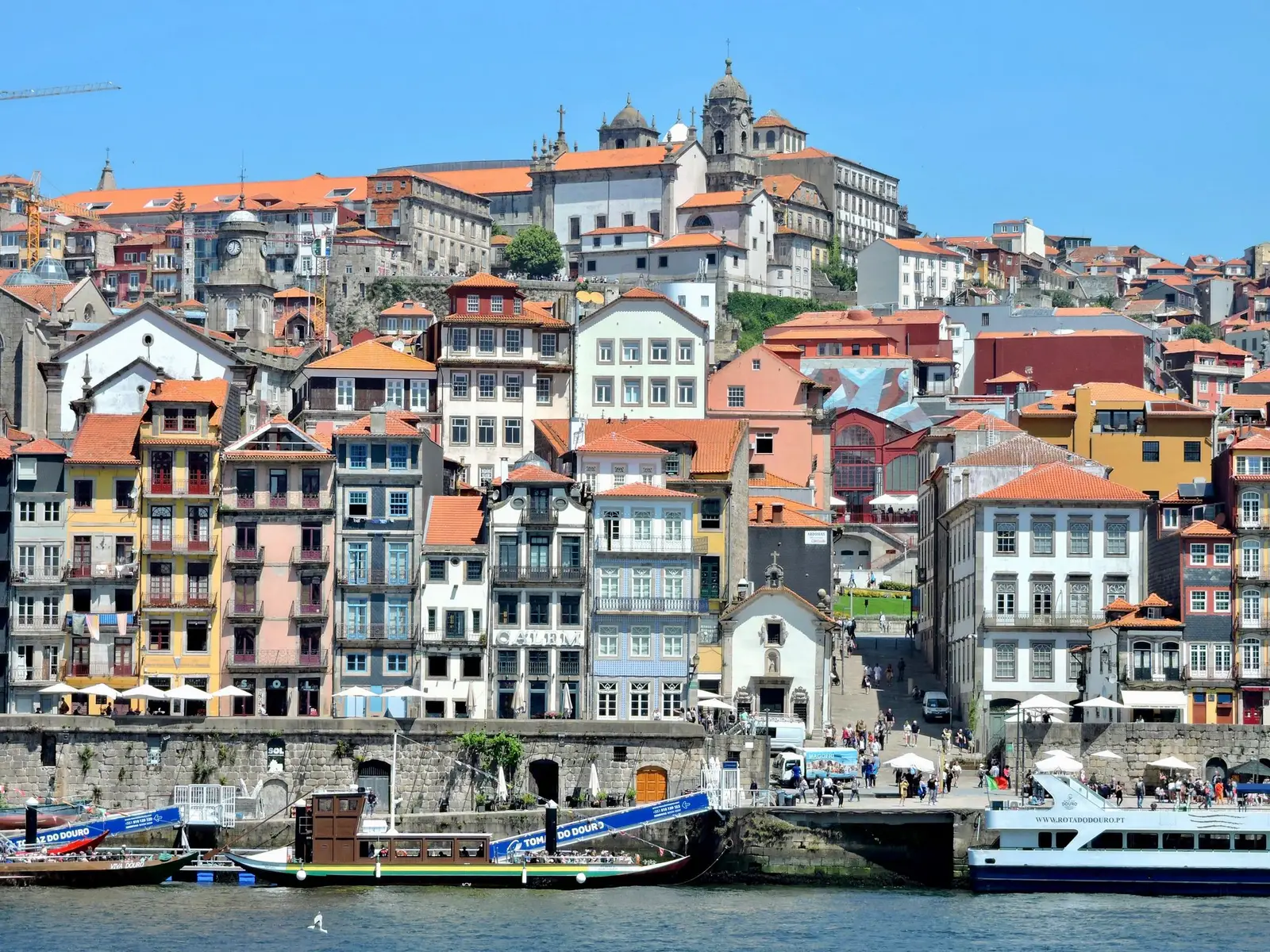
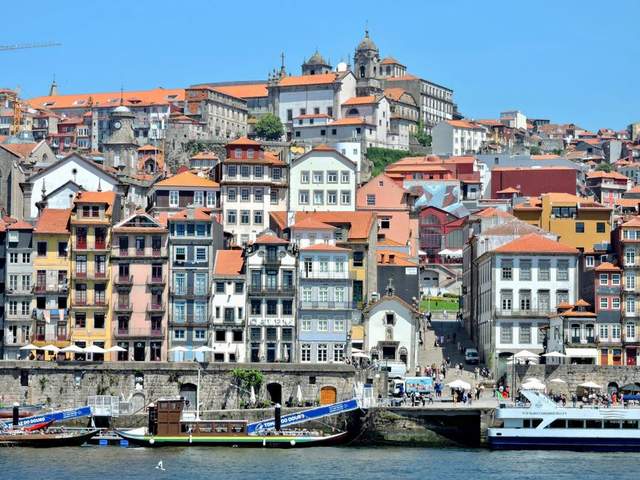
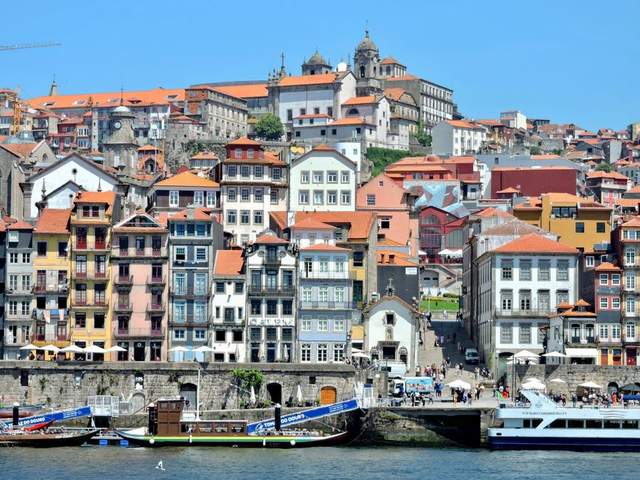
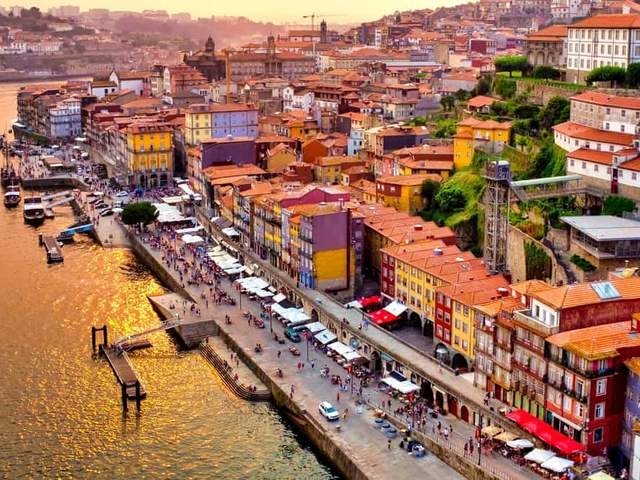
Ribeira is the photo you saw before you even arrived: narrow, colourful houses stacked on top of each other, laundry hanging from balconies and the Douro flowing below. It's part of the historic centre listed by UNESCO in 1996 and, unlike many postcards, it doesn't disappoint in real life. Praça da Ribeira and the Cais da Ribeira quayside are the natural meeting point for tourists, seagulls and old gentlemen commenting on other people's lives with scientific rigour.
Two heavyweights are just steps away. São Francisco Church looks serious from the outside, Gothic and restrained. Inside it's gilded woodwork up to the ceiling, so much that it's hard to know where to look. Next door, the 19th-century Stock Exchange Palace is visited with a guide and hides the Arab Room, a riot of arabesques and gold that makes any living room rethink its life choices.
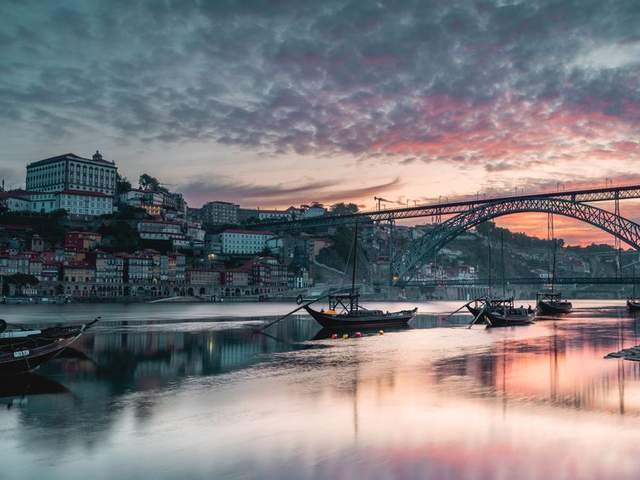
From the quay, boats leave for the six bridges cruise, a trip of about 50 minutes that shows the city from the river. Along the way you see the rabelo boats, which once carried barrels of wine down from the Douro, moored like luxury extras. In the late afternoon, a riverside terrace is compulsory. Prices rise with the view, but there are worse things in life than paying a few cents more for a fino with the Douro in the background.
Luís I Bridge and Gaia: cross over to see better
The Luís I Bridge opened in 1886 and was designed by Théophile Seyrig, a former partner of Gustave Eiffel. It's the city's iron emblem and has two decks. The lower one, at river level, is for cars and pedestrians. The upper one, about 45 metres high, is for the metro and people on foot. Crossing on top is compulsory. Stopping halfway to look down, with the metro passing beside you, is only recommended for those without vertigo.
On the other side is Vila Nova de Gaia. Technically it's another city, but as far as wine is concerned it's the home of port: it's in the cellars by the river that port ages in casks and vats. Almost all of them offer tours with tastings and explain the difference between ruby, tawny, white, LBV and vintage. By the end you understand everything. Or you think you do, which by the third glass amounts to the same thing.
To climb without sweating, the Gaia Cable Car links the riverside to Jardim do Morro in a few minutes. Right next to it, the viewpoint at the Serra do Pilar Monastery has the best view of Porto, full stop. At sunset it fills up with people, guitars and phones held high, and it's still worth every elbow.
Baixa: tiles, towers and jaw-dropping façades
São Bento Station is probably the most beautiful station you'll ever catch a train in. Or not catch one, because half the people inside only came in to see the tiles. There are about 20,000 of them, painted by Jorge Colaço in the early 20th century, with scenes from Portuguese history in blue and white. Look up, but try not to stand rooted in the way of people who actually have a train to catch.
Heading up Avenida dos Aliados, with the City Hall at the end, you reach the area of tiled façades. The Capela das Almas on Rua de Santa Catarina is covered entirely in blue. Carmo Church has one of the most photographed tiled side walls in the city and, leaning against it, is the Carmelitas Church. Between the two there's an extremely narrow house, about a metre wide, built so the churches wouldn't share a wall. Tradition says it kept the friars and the nuns apart.
A few minutes away rises the Clérigos Tower, a baroque work by Nicolau Nasoni, just over 75 metres tall. You climb more than 200 steps up an ever-narrower staircase and, at the top, all of Porto appears in orange rooftops. To recover, the Bolhão Market, reopened in 2022, is the place to taste cheeses, cured meats and fruit to the sound of vendors calling out in a northern accent. The Cathedral, at the top of the hill, also deserves the climb, if only for the view from its square.
Livraria Lello: the bookshop with a nightclub queue
Opened in 1906, Livraria Lello is a small neo-Gothic temple of carved wood, with a stained-glass ceiling and a red staircase that seems to have a life of its own. It's so beautiful that there's a queue at the door every day, which is rare for a bookshop. You pay for a ticket to get in, but the price is deducted if you buy a book. It's the perfect excuse to finally read that classic you've been putting off since school.
For years the story went that Lello inspired Hogwarts, since J.K. Rowling lived in Porto in the early 90s teaching English. The author herself denied it: she says she never went in. The queue, however, hasn't read the denial. Either way, the staircase deserves its fame, wizards or no wizards.
On the way out you're next to the Jardim da Cordoaria and Praça de Lisboa, with olive trees planted on top of the shops, a good place to breathe between Lello and the Clérigos. At night, the streets around Rua da Galeria de Paris fill up with people holding drinks. Rua das Flores, pedestrianised and full of restored façades, links the São Bento area to Largo de São Domingos, at the gates of Ribeira. It's the prettiest way down in the city.
At the table: francesinhas, tripe and a fino, please
The francesinha is Porto's answer to the question «what if we put everything inside one sandwich?». It has bread, ham, linguiça, sausage and steak, all covered in melted cheese and drowned in a spicy beer and tomato sauce. It often comes with a fried egg on top and chips around it. Every place swears its sauce is the real one. It's not a meal, it's a life decision, and it's best not to plan on climbing the Clérigos straight afterwards.
Then there's tripas à moda do Porto, tripe with white beans and cured meats, the dish that gave the people of Porto the nickname «tripeiros». Legend has it that in 1415 the city gave all its meat to the fleet sailing for Ceuta and kept only the tripe. Culinary patriotism at its finest. For something quicker, there's the sandes de pernil (roast pork sandwich), ideally with Serra cheese, and the bifanas at neighbourhood cafés.
In Porto, draught beer is ordered as a fino and an espresso is a cimbalino. In Lisbon they say imperial and bica, but there's no point starting that debate at the counter. Vinho verde goes well with seafood and grilled fish, and port is saved for the end, ideally a tawny with a long conversation. For sweets, look for neighbourhood pastry shops and apply the universal rule of «just one more», which in Portugal is always a lie.
Foz and Matosinhos: where the river meets the sea
When the city gets too tight, do what the locals do and head to Foz. Tram 1 leaves near Infante and runs along the Douro to Passeio Alegre, a trip of about 20 to 25 minutes in wooden carriages that creak with charm. It's more of an outing than a means of transport: those in a hurry take the bus, those with sense take the tram.
At Foz do Douro, the river flows into the Atlantic and the mood changes. There are palm trees, the Passeio Alegre Garden and the Felgueiras Lighthouse, where on stormy days the waves crash against the sea wall in a free show. The soaking is also free for anyone who gets too close. The seafront continues along Avenida do Brasil, past the Pérgola da Foz, to the Castelo do Queijo, a fort named «Cheese Castle», like a snack.
Right after comes Matosinhos, the unofficial capital of grilled fish. By the fishing port, the street grills give off smoke that is basically advertising: sardines in summer, sea bass, bream, octopus and shellfish all year round. The beach is wide and good for walking. The Atlantic water, though, even in August, takes your breath away, and not because of its beauty.
The secret: gardens with views that tourists skip
Everyone goes to Serra do Pilar. Few climb to the Crystal Palace Gardens, about ten minutes' walk from the Clérigos. There, peacocks stroll around as if they paid rent, and the viewpoints over the Douro are almost empty on weekdays. There's shade, benches and a view of the river heading for the sea that justifies the walk.
Even more hidden is the Jardim das Virtudes, a terraced garden running down the slope towards Miragaia. In the late afternoon, especially in summer, locals gather there with blankets and beers to watch the sun set over the river. There's no ticket office and no queue, just the silence of people who know they've found one of the best spots in town.
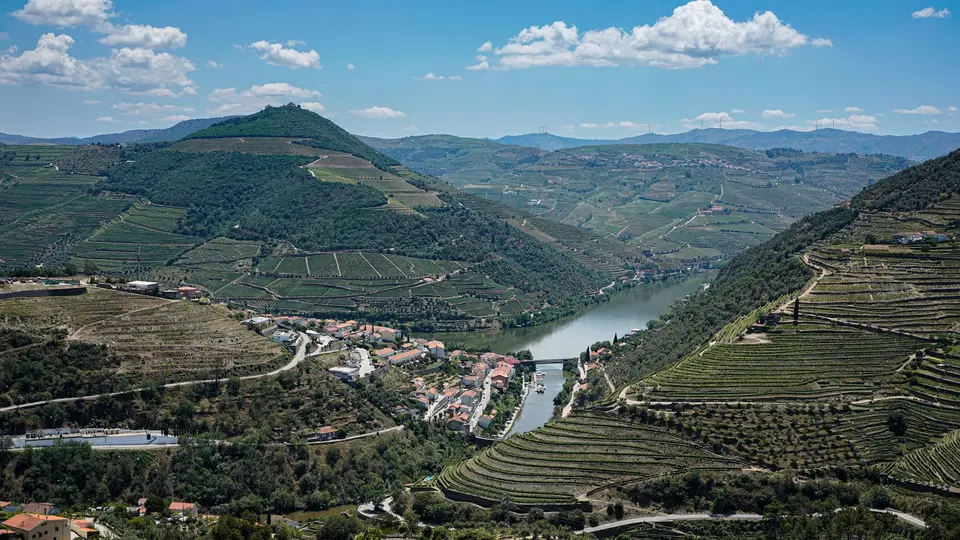
The Vitória viewpoint, among the narrow streets of the old Jewish quarter, gives a close-up view over the rooftops of Ribeira and the Cathedral. If you have an extra day, save it for the Douro Valley: the terraced vineyards are about an hour and a half away by car. A private tour saves you the wheel, the bends and, above all, the cruel choice between driving and tasting the wine.
A perfect day in Porto (legs, get ready)
09:00
Livraria Lello without the crowds
Ticket bought online and an early arrival. Red staircase, stained-glass ceiling and, with luck, photos with only steps in them.
09:45
Carmo and Clérigos
Next door, the Carmo tiles and the one-metre house. Then more than 200 steps to the top of the Clérigos Tower. Breathe deeply, literally.
11:00
Bolhão and Santa Catarina
Snacks at the Bolhão Market, the all-blue Capela das Almas and a cimbalino to recharge.
12:00
São Bento and the Cathedral
The station's 20,000 tiles and a short climb to the Cathedral, with a view from its square over the rooftops.
13:00
A proper lunch
Francesinha or tripe, depending on your courage. Then walk down Rua das Flores, which your digestion will appreciate.
14:30
Ribeira and São Francisco
São Francisco Church, the Stock Exchange Palace and, if you fancy it, the six bridges cruise from the quay.
16:30
Gaia cellars
Cross on the lower deck of the bridge and go into a cellar for a tour with tasting. Tawny or ruby? Try both, for accuracy.
18:30
Sunset at Serra do Pilar
Cable car to Jardim do Morro, the Serra do Pilar viewpoint and a walk back across the upper deck as the city turns on its lights.
20:30
Dinner and a fino
Dinner in Ribeira or the Baixa and, for the hardy ones, a drink in the streets around Galeria de Paris.
What it costs
Porto is still kind to your wallet, especially compared with other European cities. Or with Lisbon, but we didn't say that. Here are the reference figures to plan without nasty surprises.
Budget
55–85 €
per person, per day
Hostel or simple room, tascas, a «shared» francesinha (nobody shares), lots of walking and free viewpoints.
Comfortable
130–220 €
per person, per day
Central hotel, a wine tasting, the bridges cruise and riverside dinners without counting the cents.
No expense spared
300–650 €
per person, per day
Boutique hotel with a Douro view, vintage tastings, chef-driven restaurants and a day in the Douro Valley on a private tour.
Mid-range hotel in the centre
per night, double room · Dearer in summer and during São João
80 € – 170 €
Hostel bed
per night
20 € – 40 €
Cimbalino (espresso)
per coffee
0,80 € – 1,50 €
Francesinha with chips
per dish
12 € – 18 €
Tasca lunch (dish of the day)
per person
10 € – 16 €
Dinner at a mid-range restaurant
per person · With a drink
25 € – 45 €
Cellar tour with port tasting
per person · Premium tastings cost more
15 € – 35 €
Six bridges cruise
per person
15 € – 22 €
Livraria Lello entrance
per person · Deducted if you buy a book
10 € – 20 €
Clérigos Tower
per person
8 € – 12 €
Metro ride (Andante)
per ride · Plus the card on first purchase
1,50 € – 3 €
Taxi or ride-hailing airport–centre
per ride
20 € – 35 €
Approximate reference values for 2026. Always check before you go.
Tourist mistakes to avoid
- ✕Going to Livraria Lello mid-morning without a ticket. The queue has more pages than many books.
- ✕Wearing smooth-soled shoes. Porto's cobblestones, especially when wet, forgive neither elegance nor knees.
- ✕Staying only in Ribeira and thinking you've seen Porto. Foz, the gardens and the Baixa are half the fun.
- ✕Eating a francesinha at five in the afternoon and booking dinner for eight. It's not going to happen.
- ✕Comparing Porto with Lisbon out loud. The tripeiros hear everything and have an opinion on everything.
- ✕Diving in at Matosinhos expecting warm water. The Atlantic here is as refreshing as unexpected news.
«Nobody gets lost in Porto: it's always uphill to go and downhill to come back. The problem is it's never in the direction you want.»
More photos of Porto
Already packing?
Tours and transfers in Porto
Frequently asked questions
How many days do you need to visit Porto?
Two to three days let you see the historic centre, Gaia and Foz at a relaxed pace. In a single day you'll see the essentials at a brisk pace. An extra day is perfect for a trip to the Douro Valley.
How do you get from Porto airport to the centre?
Metro line E (violet) links the airport to the centre in about half an hour, with an Andante card. By taxi or ride-hailing it takes 20 to 30 minutes, depending on traffic. With heavy luggage or in a group, a private transfer saves you the metro stairs and the climbs up to the hotel.
Is Livraria Lello worth visiting?
Yes, especially if you arrive early with a ticket bought online. The interior is stunning, and the ticket price is deducted if you buy a book, which helps you forget the queue.
Where can you taste port wine?
The classic option is to cross the Luís I Bridge and visit one of the cellars in Vila Nova de Gaia, where the wine ages and where almost all offer tours with tastings. On the Porto side there are also many wine shops and wine bars offering tastings by the glass.
What's the best time to visit Porto?
Spring and early autumn have pleasant temperatures and fewer crowds. June is very lively thanks to São João on the night of the 23rd to the 24th, but accommodation sells out and gets pricier. Winter is rainier, but also quieter and cheaper.
Prices, opening hours and rules are approximate reference values and may change: always check before you go. Photos: Pexels.