How long
A full day covers the essentials. Two days let you add Monserrate, Capuchos and the coast without rushing.
Best time
Spring and early autumn, ideally on weekdays. In August Sintra is beautiful and everyone else thinks so too.
Getting there (from Lisbon)
Train from Rossio station, about 40 minutes. By car it's 30 to 40 minutes, but parking in the village is another story.
Ideal for
Palace lovers, incurable romantics, photographers and people whose legs are willing to climb.
Don't forget
A jacket, even in summer, because the fog gives no warning. Comfortable shoes and tickets bought online.
Sintra is where kings came to escape the Lisbon heat and where half the world now comes to escape into the same queues. There are palaces in ice-cream colours, a Moorish castle clinging to the rock, a well that seems to go down to the centre of the Earth and a fog that turns up without an appointment. It's too pretty to be true and too steep for flip-flops. Lace up, bring a jacket and let's climb.
Pena Palace: the castle that looks like it was drawn by a happy child
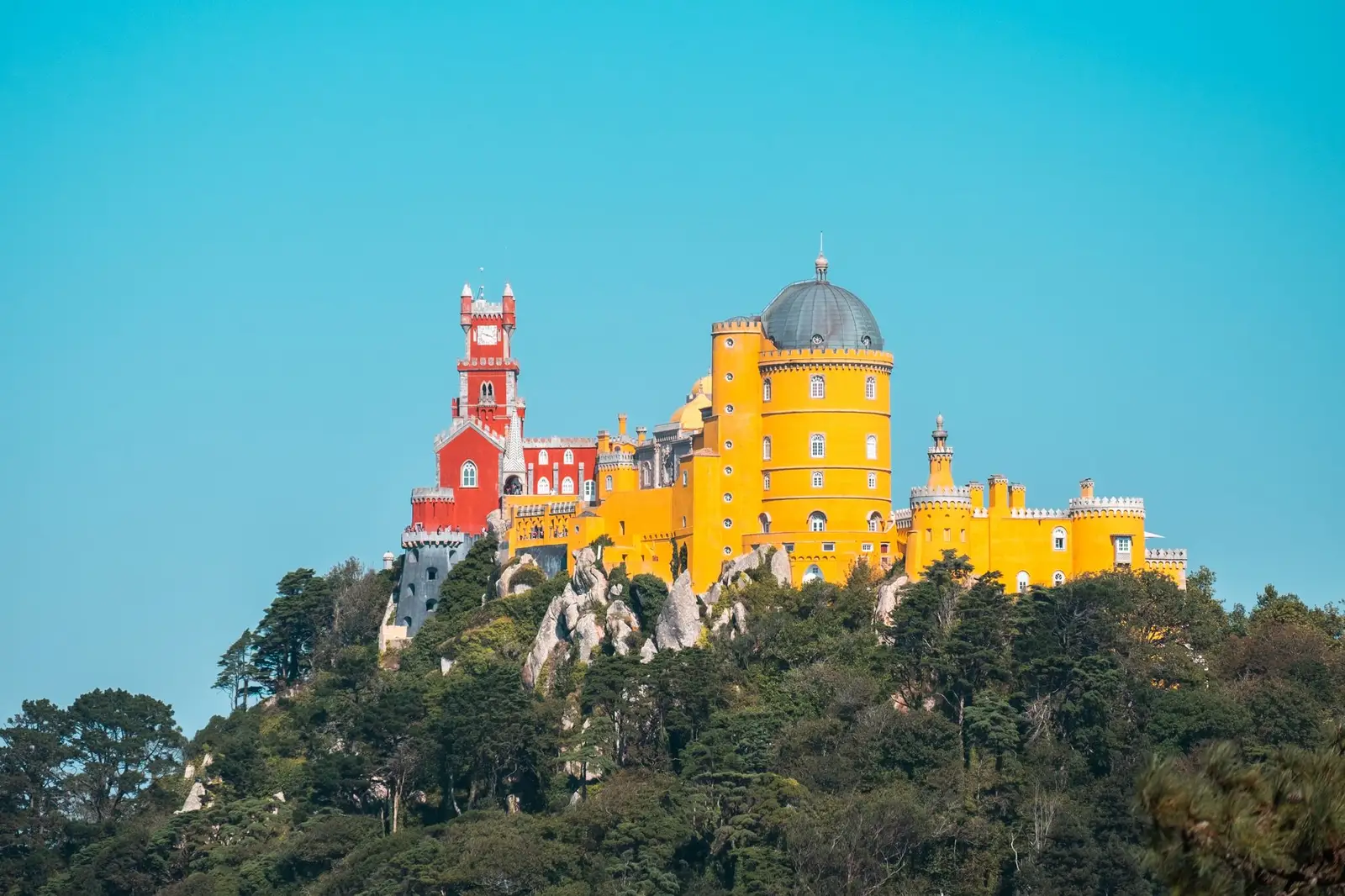
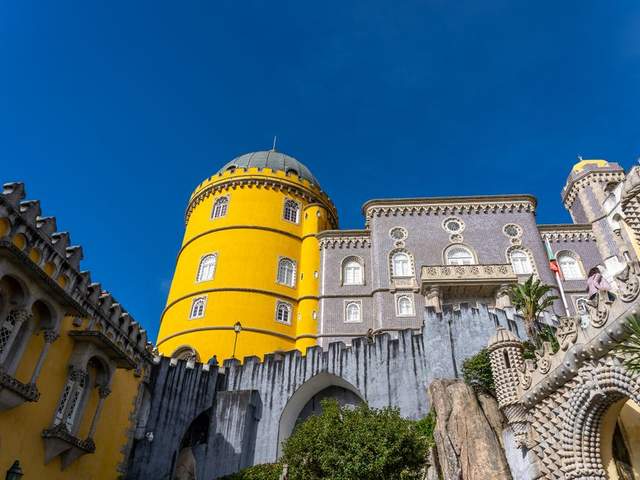
Up on one of the peaks of the hills sits the postcard you've seen a thousand times: yellow towers, red walls, domes and battlements, all at once and with no apology. Pena Palace was born in the mid-19th century from the wishes of King Ferdinand II. He was a king consort of German origin and an unashamed romantic. He bought the ruins of an old monastery and decided a whole dream would fit there. Today it's one of the great symbols of European Romanticism and part of Sintra's cultural landscape, a UNESCO World Heritage Site since 1995.
You go in through the Triton Arch, where a creature half man, half fish holds up the window above his head with a decidedly grumpy face. Inside, the rooms are more or less as the royal family left them in 1910, with stucco, period furniture and a kitchen full of copper pans that any grandmother would envy. Queen Amélia's rooms are among the most visited.
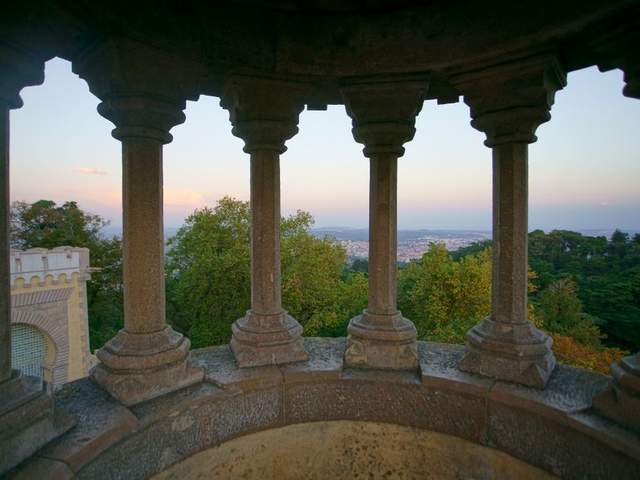
The best part, though, is outside. From the terraces you can see the hills melting into green all the way to the Atlantic and, on clear days, the plain stretching as far as the eye can see. On foggy days you see fog, which also has its gothic charm.
Don't leave without a walk around Pena Park. It has the Cruz Alta, the highest point of the range, the Chalet of the Countess of Edla and the Valley of the Lakes, with little houses for ducks that live better than many people. From the entrance to the palace it's a good few minutes uphill all the way. There's a small internal shuttle, paid separately, for those whose legs have already given out.
Moorish Castle: walls with a view of everything
Right next to Pena, snaking along the ridge, are the walls of the Moorish Castle. It was built by the Moors around the 8th and 9th centuries to keep watch over the territory. In 1147, after the conquest of Lisbon, it passed to King Afonso Henriques. Centuries of neglect followed, until Ferdinand II, the same man as Pena and with the same enthusiasm, restored it in the Romantic taste.
The visit means walking along the top of the walls, uneven step after uneven step, to the Royal Tower. The reward is the best view in Sintra: colourful Pena on the neighbouring peak, the chimneys of the National Palace far below, the village tucked into the hillside and, in the distance, the sea. This is where the photos of Pena that everyone wants, and few know where to take, come from.
Practical advice: the wind up here is no joke, some stretches have little protection and anyone with vertigo will find out quickly. On thick foggy days visibility is close to zero, but the walls appearing and disappearing among the clouds feel like a knights' film. Combine it with Pena the same morning, as they're a short walk apart.
Quinta da Regaleira: the well, the tunnels and a millionaire with imagination
In the early 20th century, António Augusto Carvalho Monteiro, nicknamed «Monteiro of the Millions» for obvious reasons, decided to turn this estate into an encyclopaedia in stone. He hired the Italian architect and set designer Luigi Manini, and the result is a neo-Manueline palace, a chapel and gardens full of symbols. There are references to alchemy, Freemasonry, the Templars and Dante's Divine Comedy. Nothing here is decoration by chance. Or perhaps it is, which is even more mysterious.
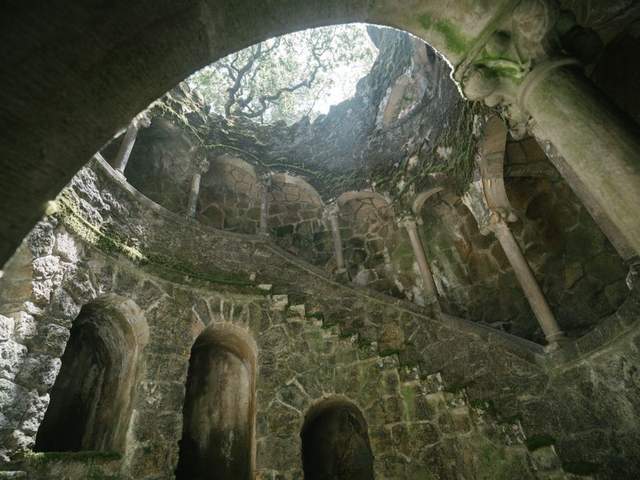
The star is the Initiation Well: a spiral staircase about 27 metres deep with nine landings. The most common reading links them to the circles of Dante's Inferno. You go down from the top, looking up at an ever-smaller circle of sky. At the bottom, dark tunnels lead to the Waterfall Lake, which you cross on stepping stones. There's also the Unfinished Well, smaller and less crowded.
Regaleira is about 10 to 15 minutes' walk from the village centre, on a road that is finally flat. The problem is the queue for the well, which can be long in high season. Arrive at opening time or late in the afternoon and have your phone torch ready for the tunnels. Allow at least two hours, because the gardens hide grottoes, towers and stairways you only discover with time.
The village and the National Palace: the most famous chimneys in the country
In the heart of the village, impossible to miss, is the National Palace of Sintra, with its two huge white conical chimneys. They belong to the kitchens and are about 33 metres tall. They look like two upside-down ice-cream cones. It's the best-preserved medieval royal palace in Portugal and was lived in by the court from the Middle Ages until the 19th century, with major works by King João I and King Manuel I.
Inside, three rooms are worth the trip. The Swan Room has a ceiling painted with 27 golden-necked swans. The Magpie Room tells the most delicious story: King João I is said to have been caught kissing a lady of the court. To silence the gossip, he had the ceiling painted with magpies bearing the inscription «Por bem» (with good intent). The Coats of Arms Room has a dome lined with the coats of arms of the kingdom's main noble families. And there are Hispano-Moorish tiles that are among the oldest in the country.
If you arrive by train, you walk up to the centre along the Volta do Duche, a 10 to 15-minute stroll with views of the hills. In the village, look out for the neo-Manueline Town Hall and get lost in the lanes. Rua das Padarias is short, steep and extremely dangerous for any diet.
In the late afternoon, when the tour buses leave, the village changes mood. It goes quiet, with the fog rolling down the hills. It's the best argument for spending at least one night here.
Travesseiros, queijadas and wine that grows in sand
Sintra has two sweet religions. Travesseiros («pillows») are rolls of crisp puff pastry filled with egg and almond cream and dusted with sugar. Eat them warm, ideally without witnesses. Queijadas de Sintra are small tarts with a thin, crunchy crust and a fresh cheese and cinnamon filling. The recipe is centuries old and so is the addiction. Some people take a box home and arrive in Lisbon with it empty.
For lunch, avoid the terraces on the main square and walk five minutes away from the crowd. In São Pedro de Penaferrim and the side streets there are tascas with bacalhau, roast octopus, grilled meats and dishes of the day at more honest prices. If hunger strikes between palaces, a warm pão com chouriço (bread baked with chorizo) is the Portuguese solution to almost everything.
The big surprise is Colares wine. The vines grow in sandy ground by the sea, and their roots have to be planted several metres deep. The sand protected them from phylloxera in the 19th century, so many vines never needed grafting. The red made from Ramisco is tough when young and needs years in the bottle. The Malvasia white is saline and fresh. Production is tiny, so don't expect supermarket prices.
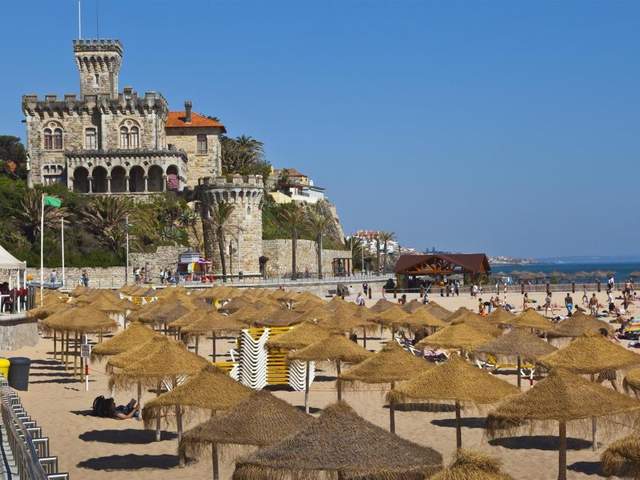
If you head down to the coast, the menu switches to grilled fish and seafood, with Atlantic views and the smell of sea spray. It's the best way to recover from the morning's stairs.
The secret: Monserrate and the Capuchos Convent
Most visitors stop at Pena and Regaleira and head back to Lisbon. Their loss. About 4 kilometres from the centre, on the road to Colares, is Monserrate Palace, built in the 19th century for the English millionaire Francis Cook. It's an exquisite blend of Moorish, Indian and Gothic influences, with domes, lace-like stone arches and an interior light that seems filtered through a bedsheet.
The gardens are the other half of the show: plants from every continent, a Mexican garden, a valley of giant tree ferns, palms and bamboo, all terraced down the slope. Before Cook, Lord Byron had passed through this estate and called Sintra a «glorious Eden». Here you hear birds instead of selfie sticks, which in Sintra is almost a luxury.
Even more hidden, in the middle of the forest, is the Capuchos Convent, founded in the 16th century by Franciscan friars. It's the anti-Pena: tiny cells lined with cork, doors so low they force you to bow your head, and lots of moss and granite. It's said to have been designed to teach humility, and it really works, especially for anyone over 1.80 m.
The silence is total and you feel you've discovered a Sintra the rest of the world hasn't found yet. Public transport to Capuchos is scarce, so it's best to go by car or with a driver.
Cabo da Roca and the coast: where the land ends (and the wind begins)
About 18 kilometres from Sintra, some 30 minutes by car, is Cabo da Roca, the westernmost point of mainland Europe. There's a lighthouse, cliffs around 140 metres high dropping sheer into the Atlantic and a monument with the line by Camões that every Portuguese knows by heart: «Where the land ends and the sea begins». Beyond here, only America.
A serious warning, for a change: the wind is serious. Hats, caps and some dignity tend to fly away. The sunset is spectacular and, for that very reason, busy. Always stay on the inside of the fences, because the cliffs are unstable and no photo is worth the risk. Nearby, Praia da Ursa has dramatic rocks and almost wild sand. The way down is steep and slippery, so it's only worth it with proper shoes and fit legs.
On the way back, stop at Azenhas do Mar: white houses hanging from the cliff and, below, a natural seawater pool that fills with the tides. Praia das Maçãs, Praia Grande, with dinosaur footprints on the rocks, and Praia da Adraga complete the coastline. The Atlantic water is cold. Very cold. But the dip counts as a spiritual experience.
A perfect day in Sintra (with legs left for the end)
08:30
Train from Rossio
Catch one of the first trains from Rossio station. About 40 minutes later you're in Sintra, ahead of the big wave of visitors.
09:15
Up to Pena
From the station, go up by tourist bus, tuk-tuk or car. Don't walk, unless you want to start the day hating the hills.
09:45
Pena Palace
Arrive close to opening time and see the interior first, while the rooms can still breathe. Then terraces and photos to your heart's content.
11:30
Pena Park and the Moorish Castle
Cross the park to the castle and walk the walls. The best view of Pena is here, not at Pena.
13:30
Down to the village for lunch
Take the trail from the castle down to the village, past the church of Santa Maria: downhill it's a pleasant stroll. Have lunch at a tasca away from the main square.
15:00
Quinta da Regaleira
Ten to fifteen minutes' walk from the centre. Initiation Well, tunnels, grottoes and gardens: allow at least two hours.
17:15
Travesseiro and the National Palace
A compulsory reward on Rua das Padarias and, if you still have energy, the Swan and Magpie rooms at the National Palace.
18:30
Cabo da Roca or Azenhas do Mar
With a car or driver, head for the coast. In summer the sun sets late, in winter early: check before setting off.
20:30
Dinner and back
Grilled fish on the coast or dinner in the village, a glass of Colares and the train back to Lisbon. Or, even better, sleep in Sintra.
What it costs
Sintra isn't cheap, but nobody said living like a king consort came at a bargain. Monument tickets are the biggest slice, so choose carefully which ones you really want to see.
Budget
70–110 €
per person, per day
Train, two well-chosen monuments, a tasca lunch, a compulsory travesseiro and a bed in a hostel or guesthouse. Your legs do the rest.
Comfortable
150–250 €
per person, per day
Charming accommodation, three or four monuments, dinner with Colares wine and a transfer so you don't waste time at bus stops.
No expense spared
400–800 €
per person, per day
Luxury hotel overlooking the hills, a full-day private tour with Cabo da Roca at sunset and bottles of Colares old enough to vote.
Lisbon–Sintra train
per person, one way · From Rossio
2 € – 3 €
Taxi or ride-hailing Lisbon–Sintra
per ride · Depends on traffic and time of day
35 € – 60 €
Hop-on tourist bus around the hills
per person, per day
8 € – 15 €
Pena Palace and Park
per person · The park alone is cheaper
20 € – 30 €
Moorish Castle
per person
12 € – 18 €
Quinta da Regaleira
per person · Includes the well and tunnels
15 € – 25 €
National Palace of Sintra
per person
12 € – 18 €
Monserrate Palace and Gardens
per person
10 € – 16 €
Travesseiro or queijada
each · Nobody eats just one
1,50 € – 3 €
Tasca lunch
per meal
15 € – 25 €
Restaurant dinner
per meal · More if there's Colares on the table
30 € – 55 €
Mid-range hotel in Sintra
per night, double room
100 € – 200 €
Approximate reference values for 2026. Always check before you go.
Tourist mistakes to avoid
- ✕Driving into the village centre on a Saturday in August. Parking in Sintra is a local legend, harder to find than the Holy Grail at Regaleira.
- ✕Trying to see everything in one day. Pena, the Castle, Regaleira, the National Palace, Monserrate and Cabo da Roca back to back isn't an itinerary, it's an endurance test.
- ✕Walking up from the village to Pena without realising it's uphill all the way. All the way. Even the bits that look flat.
- ✕Turning up at Pena at midday without a ticket. The queue will remind you of the tax office, only sunnier.
- ✕Coming in shorts and flip-flops because it was 30 degrees in Lisbon. In Sintra the fog and the cold turn up whenever they feel like it, and Regaleira's stairs are slippery.
- ✕Leaving without trying travesseiros and queijadas. It's like going to Rome and not seeing the Pope, only sweeter.
«In Sintra there are four seasons in one day and a full bus in each of them.»
More photos of Sintra
Already packing?
Tours and transfers in Sintra
Frequently asked questions
How many days do you need to visit Sintra?
A full day is enough for Pena, the Moorish Castle, Regaleira and the village, as long as you start early. With two days you can add Monserrate, the Capuchos Convent and the coast, including Cabo da Roca, without rushing.
How do you get from Lisbon to Sintra?
The most practical way is the train from Rossio station, a journey of about 40 minutes. By car it takes 30 to 40 minutes, but parking in the village is very difficult. A transfer or private tour is the most comfortable option if you want to combine several places in the hills.
Which is better to visit: Pena Palace or Quinta da Regaleira?
They're very different experiences. Pena is the romantic palace of colours and views; Regaleira is a labyrinth of symbols, grottoes and the famous Initiation Well. If you only have time for one, choose Pena for the iconic image or Regaleira for the adventure.
Do you need to buy Sintra tickets in advance?
In high season and at weekends, yes, buying online is strongly recommended. It saves time at the ticket offices and, at some monuments, guarantees your preferred entry time.
Can you walk from Sintra station to Pena Palace?
You can, but it's about 3 kilometres uphill all the way on steep paths and roads, which can take close to an hour. Most people go up by bus, tuk-tuk or car and save the walk for the way down to the village.
Prices, opening hours and rules are approximate reference values and may change: always check before you go. Photos: Pexels.