How long
One day is plenty. Many people combine Guimarães and Braga on the same day.
Best time
All year round. In spring and autumn the square terraces are wonderful; in summer there are street festivals.
Getting there (from Porto)
By car it is about 55 km on the A3 and A7, around 50 minutes. By train, just over an hour.
Ideal for
Lovers of Portuguese history, well-kept medieval centres and terraces with a local feel.
Don't forget
Shoes with good grip: the streets are stone and the castle sits on a hill, a small one, but a hill.
In Guimarães there is a sentence written on a city wall that says it all: «Aqui nasceu Portugal», Portugal was born here. The locals take this seriously, and rightly so. This is where Afonso Henriques began to conquer the kingdom, and the historic centre still looks ready to receive the court. But don't be fooled by the solemnity: the squares are full of terraces, students and people who know how to live. The history is serious; the rest, not so much.
The castle: where it all began
Guimarães Castle was begun in the tenth century on the orders of Countess Mumadona Dias, to protect the monastery and the town from attacks from the north and south. Later it was the home of the counts of Portucale, and it is traditionally named as the birthplace of Afonso Henriques, the first king of Portugal.
It was near here, in 1128, that the Battle of São Mamede was fought, in which Afonso Henriques defeated his own mother's troops and took control of the county. It is the moment the Portuguese consider the beginning of the country. A complicated family, a whole country as a result.
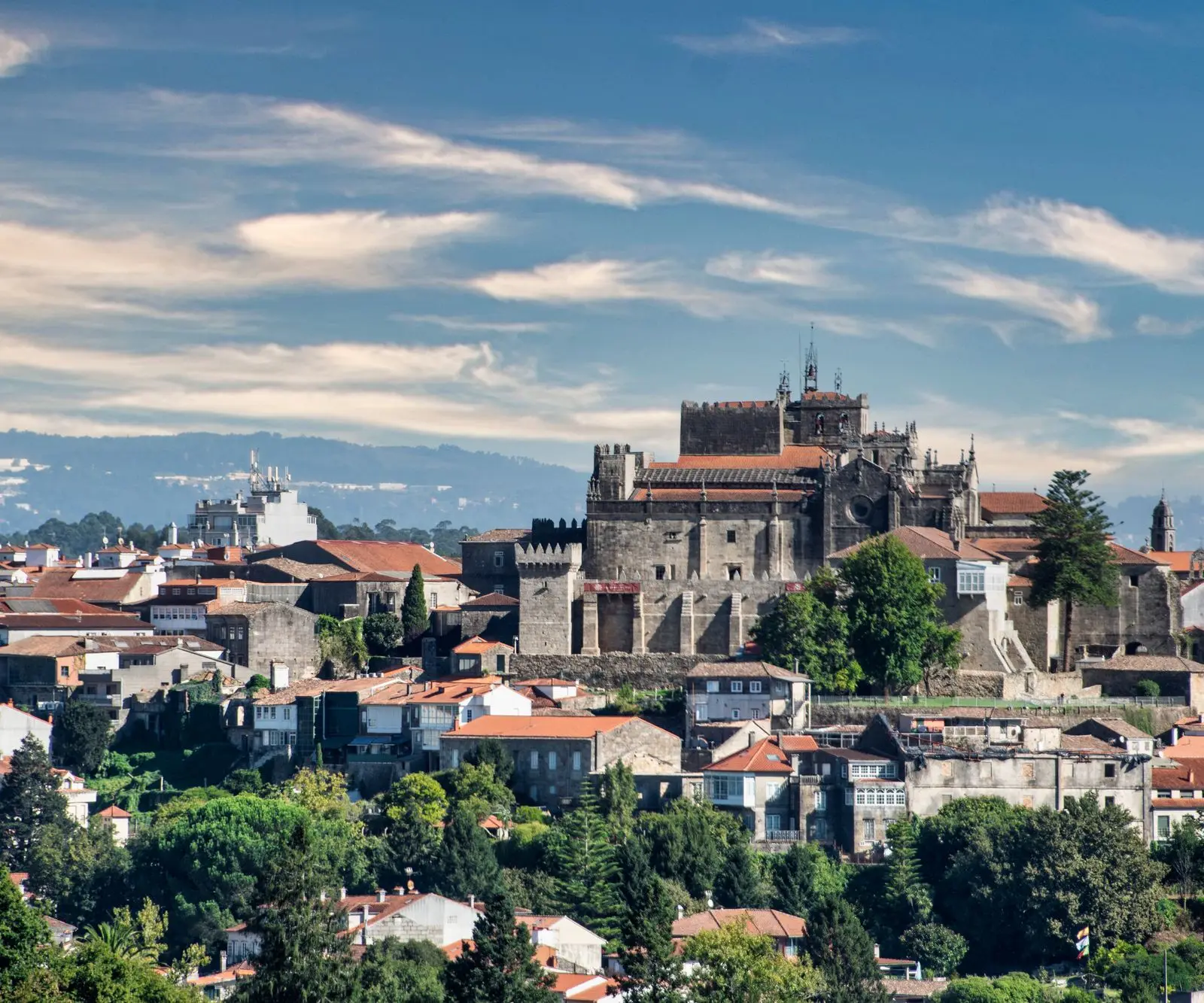
The castle is small and sturdy, with a keep in the centre and battlements you can walk along. Beside it is the little Church of São Miguel do Castelo, where, according to tradition, the first king was baptised. The view from the top shows the whole city, with red roofs sloping down to the centre.
The Palace of the Dukes of Braganza
Just below the castle is the Palace of the Dukes of Braganza, a fifteenth-century palace with very tall chimneys and the air of a northern European castle. It was built by the first Duke of Braganza and, after centuries of neglect, restored in the twentieth century, with more imagination than historical accuracy, according to some experts.
Inside are huge rooms with wooden ceilings, tapestries, antique furniture, weapons and a chapel with stained glass. The Banquet Hall, with a ceiling shaped like an upturned ship's hull, is the most impressive.
In front of the palace stands the statue of Afonso Henriques, with sword and shield and the look of a man who accepts no complaints. It is one of the city's classic photos.
The historic centre: squares, arcades and granite
The historic centre of Guimarães has been a UNESCO World Heritage Site since 2001 and is one of the best preserved in the country. Granite streets, houses with wooden and iron balconies and medieval squares make the visit a walk through time, without overwhelming crowds.
Its heart is Largo da Oliveira, with the Church of Our Lady of Oliveira and the Padrão do Salado, a small Gothic monument commemorating a fourteenth-century battle. Next door, Praça de Santiago has old houses and terraces where locals gather in the late afternoon. Rua de Santa Maria links the centre to the castle and is one of the prettiest streets in town.
On Largo do Toural, the main square, is the wall bearing the words «Aqui nasceu Portugal». In 2012 Guimarães was European Capital of Culture, and since then it has gained cultural centres and a lively programme. The Couros area, with its old tanning pits, was added to the World Heritage listing more recently.
Penha: the cable car and the city's mountain
To see Guimarães from above, take the cable car up to Penha hill. The ride lasts a few minutes and passes over the trees, with the city shrinking below.
At the top there is a sanctuary, huge granite boulders, caves, forest paths and picnic areas. It's where Guimarães families spend their Sundays, and the fresh air feels good after the warm stone of the centre.
On clear days the view stretches across the Minho to distant mountains. At sunset it is one of the best viewpoints in the region. Check the time of the last cable car so you don't have to walk down.
Eating in Guimarães: rojões, toucinho do céu and tortas
Guimarães cooking is Minho at heart: rojões (fried pork), papas de sarrabulho, roast kid and bacalhau, served in generous portions with Vinho Verde. It isn't diet food; it's Sunday food.
For dessert, the city has two classics with convent origins. Toucinho do céu is a dense, very sweet almond and egg-yolk cake. Tortas de Guimarães are puff pastries filled with egg cream and chila squash jam. The old pastry shops in the centre are the place to try them.
In the late afternoon, the squares in the centre fill with terraces. Ordering a chilled Vinho Verde in Largo da Oliveira, with the Gothic monument in front of you, is one of the best ways to end the day.
A perfect day in Guimarães
09:30
Castle
Climb the walls and see the city from above, before the groups arrive.
10:30
Palace of the Dukes
The halls, the chapel and the Banquet Hall with its ship-shaped ceiling.
11:30
Rua de Santa Maria and the centre
Walk down to Largo da Oliveira and Praça de Santiago.
13:00
Minho lunch
Rojões or roast kid with Vinho Verde at a restaurant in the centre.
15:00
Toural and Couros
The «Aqui nasceu Portugal» wall and the old tanning district.
17:00
Penha cable car
Up the hill, a walk among the boulders and a view over the Minho.
19:30
Late afternoon in Largo da Oliveira
A terrace, Vinho Verde and a torta de Guimarães to finish.
What it costs
Guimarães is one of the kindest cities on the wallet in the north. Tickets are cheap and you eat very well for little.
Budget
50–90 €
per person, per day
Hostel, lunch specials, castle and Palace with a combined ticket, and the squares, which are free and the best thing in town.
Comfortable
110–190 €
per person, per day
Hotel in the centre, the cable car, a Minho dinner with wine and an afternoon in Braga.
No expense spared
280–550 €
per person, per day
Historic pousada, chef-led restaurants and a private tour combining Guimarães, Braga and Gerês.
Hostel bed
per night
20 € – 35 €
Mid-range hotel or guesthouse
per night, double room
65 € – 120 €
Boutique hotel or pousada
per night, double room
140 € – 260 €
Palace of the Dukes
per person · Combined tickets with the castle are available
5 € – 10 €
Castle
per person
4 € – 8 €
Penha cable car
per person, return
6 € – 9 €
Lunch special
per meal
10 € – 16 €
Minho dinner with wine
per person
20 € – 38 €
Coffee and torta de Guimarães
per person
2 € – 4 €
Approximate reference values for 2026. Always check before you go.
Tourist mistakes to avoid
- ✕Seeing only the castle and leaving. The historic centre matters as much as the walls.
- ✕Climbing to the castle in smooth sandals on a rainy day. Wet granite is unforgiving.
- ✕Missing the last Penha cable car and finding out what walking down costs you.
- ✕Confusing toucinho do céu with actual bacon. One is a convent sweet; the other is something else entirely.
- ✕Telling a local that Portugal was born in Braga or Lisbon. The argument isn't worth it.
- ✕Coming in a hurry. Guimarães deserves a terrace, and terraces deserve time.
«Portugal was born here. The rest of the country only came later, to visit.»
More photos of Guimarães
Frequently asked questions
How do I get from Porto to Guimarães?
By car it is about 55 km, around 50 minutes. By train, just over an hour to Guimarães station, a few minutes' walk from the centre. A private tour lets you combine Guimarães and Braga on the same day.
Why is Guimarães called the birthplace of Portugal?
Because Afonso Henriques lived here, traditionally said to have been born in the castle, and near here he won the Battle of São Mamede in 1128, the moment considered the beginning of the country.
How long do I need to visit Guimarães?
One day is enough for the castle, the Palace of the Dukes, the historic centre and Penha. Half a day covers the essentials if you add Braga on the same day.
What should I eat in Guimarães?
Rojões, roast kid, papas de sarrabulho and bacalhau. For dessert, toucinho do céu and tortas de Guimarães, filled with egg cream and chila jam.
Is the historic centre of Guimarães a World Heritage Site?
Yes. UNESCO listed the historic centre in 2001, and more recently the Couros area, with its old tanneries, was added.
Prices, opening hours and rules are approximate reference values and may change: always check before you go. Photos: Pexels.