How long
One day for the town, the cape and the beaches. With two, add the Berlengas, which take most of a day.
Best time
May to September for the Berlengas, which depend on the sea. Surf is good all year, and autumn brings the best waves.
Getting there (from Lisbon)
About 95 km on the A8, just over an hour by car. Direct buses from Lisbon take around an hour and a half.
Ideal for
Surfers, nature lovers, cliff photographers and people who eat fish for breakfast without blinking.
Don't forget
Seasickness tablets if you go to the Berlengas. The sea out there has a strong personality.
Peniche was an island until sand joined it to the mainland, and it still behaves like one: a fishing town surrounded by sea on almost every side, with cliffs that look hand-carved and waves that attract the world's best surfers. Here fish reaches the harbour in the morning and is on the grill by lunch. And offshore, half an hour by boat, there is a granite island with a fort perched on a rock, straight out of a pirate novel.
The town and the fortress: fishing and freedom
Peniche is one of the country's main fishing ports, and you feel it everywhere: in the smell of the sea, the colourful boats, the fish restaurants by the harbour and the market. The town is simple, honest and hard-working, without the airs of other beach destinations.
The sixteenth-century Peniche Fortress defended the coast for centuries. In the twentieth century, under the dictatorship, it was a high-security political prison, from which several prisoners escaped in 1960 in one of the most famous breakouts in Portuguese history. Today it is the National Museum of Resistance and Freedom, a moving place that tells this story through cells, testimonies and objects of the time.
Peniche also has an old tradition of bobbin lace, made by hand with dozens of small wooden bobbins. You can still see lacemakers at work, and there is a museum dedicated to this craft, which demands more patience than any surfer waiting for a wave.
Cabo Carvoeiro: land's end, Peniche style
At the tip of the peninsula is Cabo Carvoeiro, with its lighthouse and limestone cliffs cut by the sea into incredible shapes. In front rises the Nau dos Corvos, an isolated rock that looks like a ship under sail and is Peniche's postcard image.
There is a boardwalk and several viewpoints along the coast, where you can see layers of rock, caves and natural arches. In rough seas, the waves crashing against the cliffs are a show of raw power. In calm seas, the water turns a blue that hardly looks Atlantic.
It's one of the best spots in the region for sunset. Bring a jacket: the wind on the cape keeps no schedule and accepts no arguments.
Supertubos and Baleal: surf for every level
Supertubos beach has one of the most famous barrelling waves in Europe and hosts a stop of the world surf tour. On big days, watching the pros ride through the tube is a show, even for those who have never touched a board.
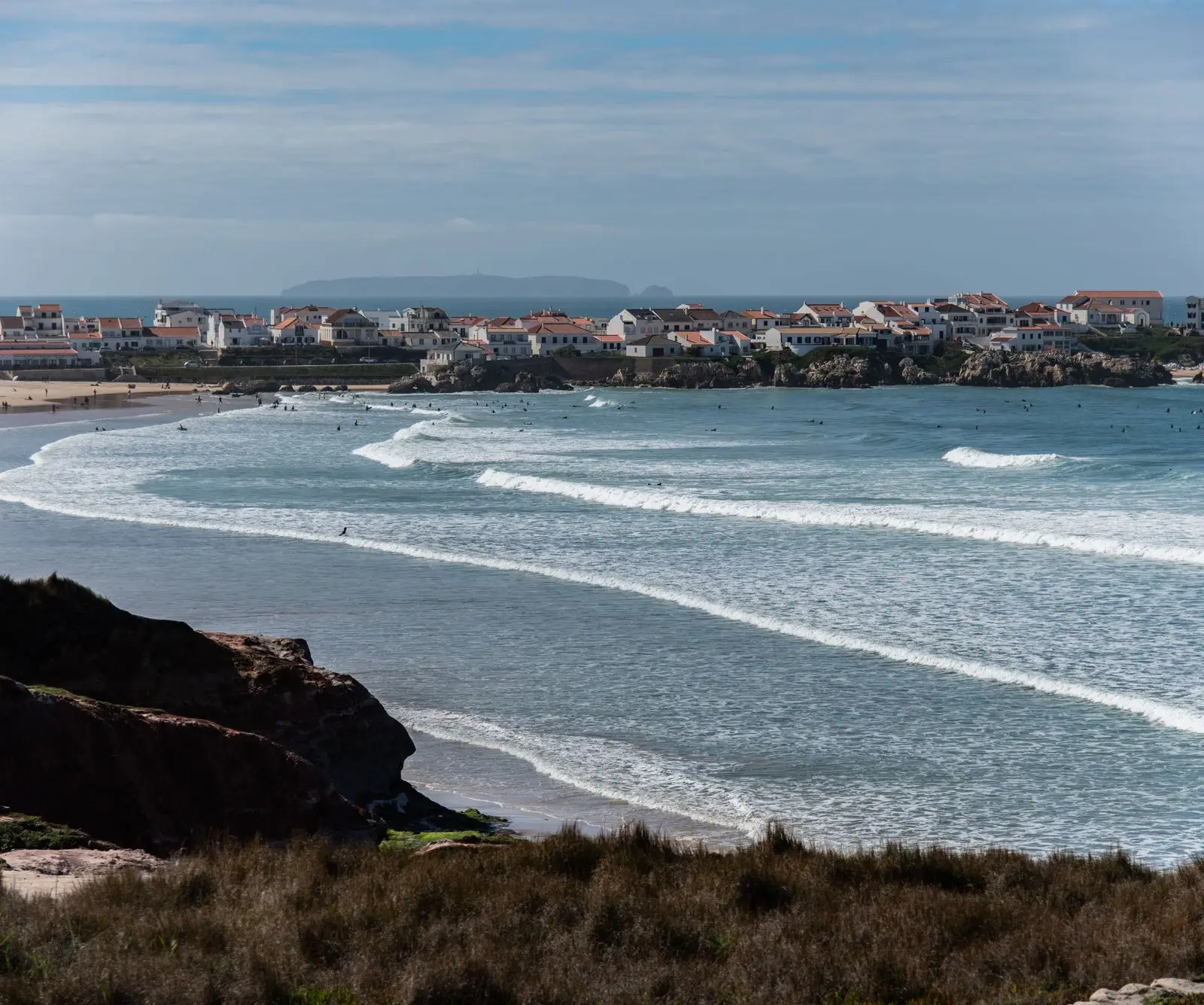
Peniche's great advantage is the shape of the peninsula: there is always a sheltered beach on one side or the other, which makes it one of the best places in Europe to learn. Surf schools are everywhere, especially in Baleal.
Baleal is a small island linked to land by a sandy isthmus, with beaches on both sides, white houses and a relaxed surf vibe. In the evening, Baleal's bars fill with sun-tanned people and talk of waves.
The Berlengas: the island with a fort on a rock
The Berlengas archipelago lies about 10 km off the coast and is a UNESCO Biosphere Reserve. The main island, Berlenga Grande, is reddish granite, with caves, coves of crystal-clear water and thousands of noisy seabirds.
The seventeenth-century Fort of São João Baptista is built on an islet linked to the island by a narrow stone bridge. It is one of the most beautiful images of the Portuguese coast. There are short trails across the island and boat trips into the caves, where the water has colours that look retouched.
Crossings leave from Peniche harbour, mostly from May to September, always depending on sea conditions. The number of daily visitors is limited to protect the island, so book ahead. And be prepared: the trip can be bumpy.
Eating in Peniche: fish, caldeirada and goose barnacles
In Peniche you eat fish, and you eat it very well. Grilled sardines in summer, sea bass, sea bream, octopus, squid and the famous fish caldeirada, a stew served in generous pots with potatoes and bread for the sauce.
Goose barnacles, gathered from coastal rocks at considerable risk, are a pricey and much-loved delicacy. Try them at least once: the taste of the sea is intense, and eating them comes with a small show of splashes.
The restaurants by the harbour and along the seafront serve the catch of the day at reasonable prices. Ask what came in that morning and take advice. For dessert, local egg sweets round off the meal.
A perfect day (and a half) in Peniche
08:30
Peniche harbour
Coffee by the harbour and boarding for the Berlengas, if the sea allows.
09:30
Berlengas
Trails, the Fort of São João Baptista and a boat trip into the caves.
13:30
Return and late lunch
Fish caldeirada or grilled fish at a harbour restaurant.
15:00
Peniche Fortress
The National Museum of Resistance and Freedom and the story of the 1960 escape.
16:30
Supertubos
Watch the surfers, or take a lesson in Baleal.
18:00
Cabo Carvoeiro
The lighthouse, the Nau dos Corvos and sunset over the cliffs.
20:00
Dinner in Baleal
Fish, goose barnacles for the brave and a drink listening to wave stories.
What it costs
Peniche is cheaper than the beaches along the Lisbon coast. What adds up is the Berlengas crossing and, if you like them, the goose barnacles.
Budget
60–100 €
per person, per day
Surf house, lunch specials, Cabo Carvoeiro on foot and free beaches. The Berlengas if the budget stretches.
Comfortable
130–230 €
per person, per day
Hotel in town, the Berlengas crossing, a surf lesson and a fish dinner with wine.
No expense spared
320–620 €
per person, per day
Sea-view hotel, private boat trip to the caves, goose barnacles regardless of price and private transport from Lisbon with a stop in Óbidos.
Hostel bed or surf house
per night · More expensive in summer
22 € – 40 €
Mid-range hotel or guesthouse
per night, double room
70 € – 140 €
Sea-view hotel
per night, double room
150 € – 300 €
Berlengas crossing
per person, return · Subject to sea conditions
25 € – 40 €
Group surf lesson
per person, about 2 hours · Board and wetsuit included
30 € – 50 €
National Museum of Resistance and Freedom
per person
3 € – 6 €
Lunch special
per meal
12 € – 18 €
Fish dinner with wine
per person
22 € – 40 €
Portion of goose barnacles
per person · Price varies a lot by season
10 € – 25 €
Approximate reference values for 2026. Always check before you go.
Tourist mistakes to avoid
- ✕Going to the Berlengas without booking in August. The island has a visitor limit and places sell out.
- ✕Getting too close to the cliff edge for a photo. Limestone breaks without warning.
- ✕Paddling out at Supertubos to «give it a go» without experience. The wave is for pros.
- ✕Eating a big meal before the Berlengas crossing. Trust me.
- ✕Thinking Peniche is only about surfing. The fortress and the story it tells deserve time.
- ✕Forgetting a jacket at the end of the day at Cabo Carvoeiro, even in July.
«In Peniche the sea decides everything: whether there's fish, whether there are waves and whether there's a boat to Berlenga.»
More photos of Peniche
Frequently asked questions
How do I get from Lisbon to Peniche?
By car it is about 95 km on the A8, just over an hour. Direct buses from Lisbon take around an hour and a half. A private tour lets you combine Peniche, Baleal and Óbidos on the same day.
How do I visit the Berlengas?
Crossings leave from Peniche harbour, mainly from May to September, and depend on sea conditions. Daily visitor numbers are limited, so it's best to book in advance.
Is Peniche good for learning to surf?
Yes. Thanks to the shape of the peninsula there is almost always a sheltered beach with waves suitable for beginners, and Baleal has many surf schools.
What is Peniche Fortress?
A sixteenth-century fortress that was a political prison during the dictatorship, from which several prisoners escaped in 1960. Today it is the National Museum of Resistance and Freedom.
What should I eat in Peniche?
Fresh grilled fish, fish caldeirada, sardines in summer and, if you like them, goose barnacles. The harbour restaurants serve the catch of the day.
Prices, opening hours and rules are approximate reference values and may change: always check before you go. Photos: Pexels.